Surfing the West Algarve: A Complete Guide to the Best Breaks
Why the West Algarve is Europe's Surf Capital
Tucked into the southwestern corner of Portugal, the West Algarve catches Atlantic swell from almost every direction. The coastline bends sharply at Cabo de São Vicente — the most south-westerly point of mainland Europe — which means within a 25-minute drive you can choose between an exposed west-coast beach firing on a clean north-west swell, or a sheltered south-coast cove glassed off by an offshore northerly wind. Few places on the continent give surfers that much optionality in one trip.
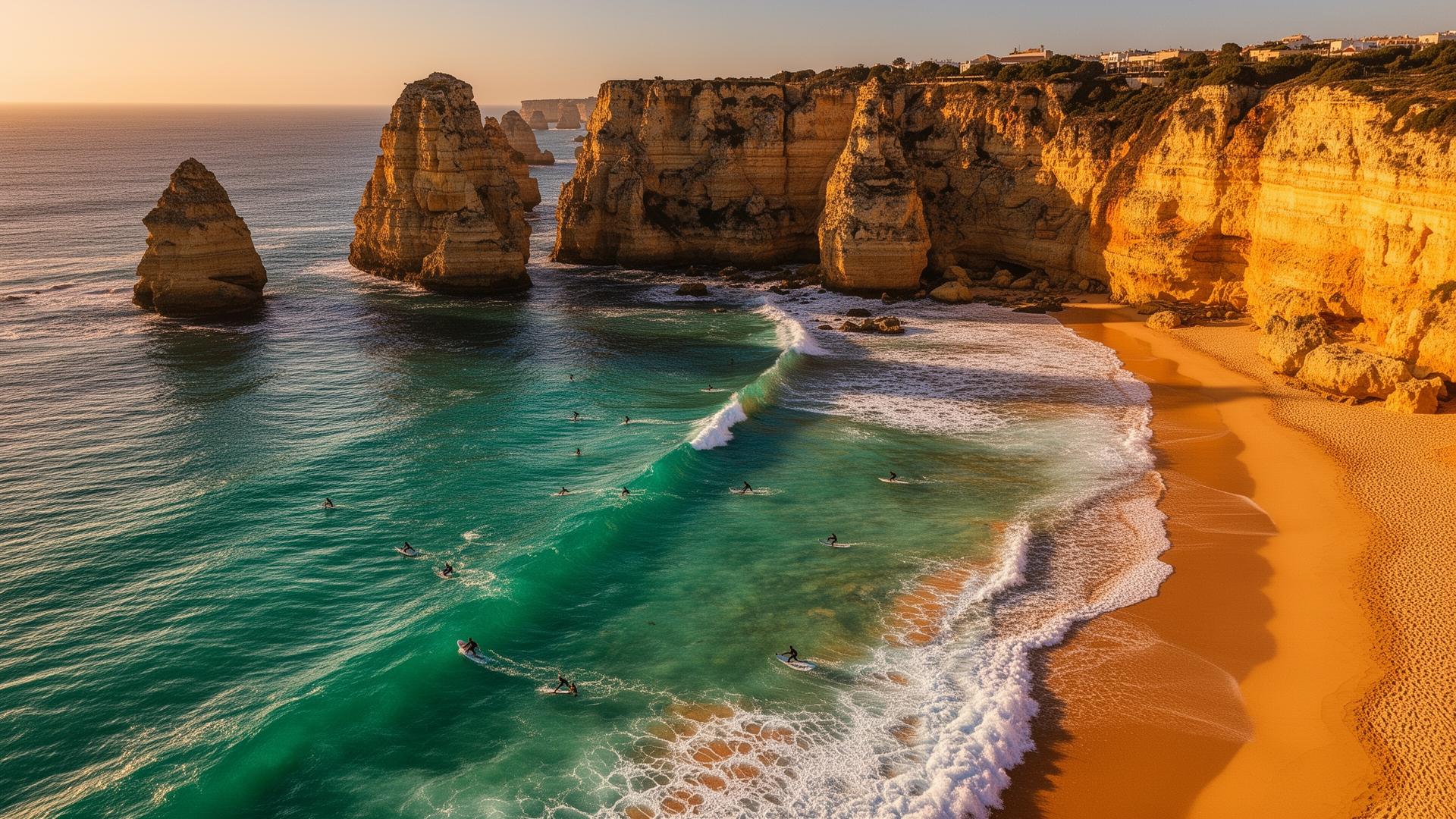
What makes the region special isn't just the wave count, it's the setting. The entire west coast sits inside the Parque Natural do Sudoeste Alentejano e Costa Vicentina, Europe's largest protected coastal park. That means no high-rises, no beachfront sprawl, no jet-ski rentals shredding the line-up. You park on a sand track, walk down a wooden boardwalk through the dunes, and paddle out into uncrowded peaks with cliffs and pine forest behind you.
Compare that to the busier surf hubs further north — Ericeira, Peniche, Nazaré — and the difference is obvious within an hour. The West Algarve gets a fraction of the crowd, warmer water for most of the year, and a level of natural beauty that genuinely changes how the trip feels.
When to Surf the West Algarve
The region works all year, but each season has a personality:
Autumn (September–November) is widely considered the best window. Atlantic storms in the North Atlantic start firing reliable groundswell, water is still warm from the summer (20–22 °C), the wind tends to drop, and the summer crowds have gone. Most local surfers will quietly admit October is their favourite month.
Winter (December–February) brings the most power. Swells are bigger, more frequent, and reach spots that don't break in summer. Water drops to 15–17 °C — a 4/3 wetsuit is plenty. Storm fronts pass through quickly, so even a "bad week" usually delivers two or three excellent days. Big-wave chasers head to Nazaré, everyone else stays here for cleaner faces.
Spring (March–May) is the underrated season. Long-period swells keep arriving, the wind starts to swing offshore in the mornings, water warms back up, and the cliffs and meadows explode with wildflowers.
Summer (June–August) is the gentlest. Swells drop to 1–3 ft on most days, perfect for beginners and longboards. The famous Nortada wind (a strong north-westerly thermal) blows most afternoons, which is brutal on the open west coast but offshore at south-coast spots like Tonel and Zavial. Plan dawn sessions on the west, late-morning sessions on the south.
The Best Surf Spots Near Our Villas
You can comfortably reach a dozen quality breaks from a base in Burgau, Luz or Budens. These are the ones we recommend most:
Cordoama (20 min drive) — A vast, open west-coast beach with powerful, consistent peaks. Best on a small-to-medium NW swell with light easterly wind. There's a café at the top of the cliff with one of the best sunset views on the coast. Intermediate to advanced — beach breaks here can pack a punch.
Castelejo (20 min) — Cordoama's quieter twin a few hundred metres south, joined by a clifftop path. Often less crowded, similar wave quality, and the lunch at the Castelejo restaurant (grilled fish, local wine) is a tradition worth keeping.
Amado (30 min) — The classic learner-to-intermediate beach near Carrapateira. Multiple peaks down a long sandy stretch mean you can usually find an uncrowded one, even in peak season. Several of the region's best surf schools are based here.
Bordeira / Carrapateira (30 min) — A massive open beach with a river-mouth lagoon behind it. Mellow rollers, soft sand bottom, dunes to nap on between sessions. The drive in over the dunes is part of the experience.
Tonel, Sagres (20 min) — Sheltered by the Sagres fortress headland, Tonel works on south, west and north-west swell. The go-to spot when the summer Nortada is wrecking the west coast. Powerful when it gets big.
Beliche (25 min) — Just around the corner from Tonel, hemmed in by dramatic ochre cliffs. More consistent in winter and excellent on cleaner days.
Zavial (15 min) — A south-coast right-hander that comes alive a handful of times each winter on a big SW swell. When it's on, it's one of the best waves in the country. When it's not, it's a beautiful family beach.
Praia da Luz (10 min) — Not a serious surf spot, but perfect for SUP, a first lesson with kids, or a flat-day swim. Sheltered bay, sandy bottom, lifeguarded in summer.
Learning to Surf in the Algarve
The West Algarve is one of the easiest places in Europe to learn. The sand-bottomed beach breaks are forgiving, the water is warm enough for short sessions without a wetsuit in summer, and the surf-school scene is mature and well-regulated. Most schools operate out of Sagres, Carrapateira or Lagos and offer:
A typical first lesson runs about three hours: 20 minutes of land theory, then straight into the whitewater. Most beginners stand up on day one. By day three or four most people are catching unbroken waves.
What to Bring
Both of our villas have outdoor showers and undercover storage, so you can rinse boards and hang wetsuits without dragging sand inside.
Where to Stay for a Surf Trip
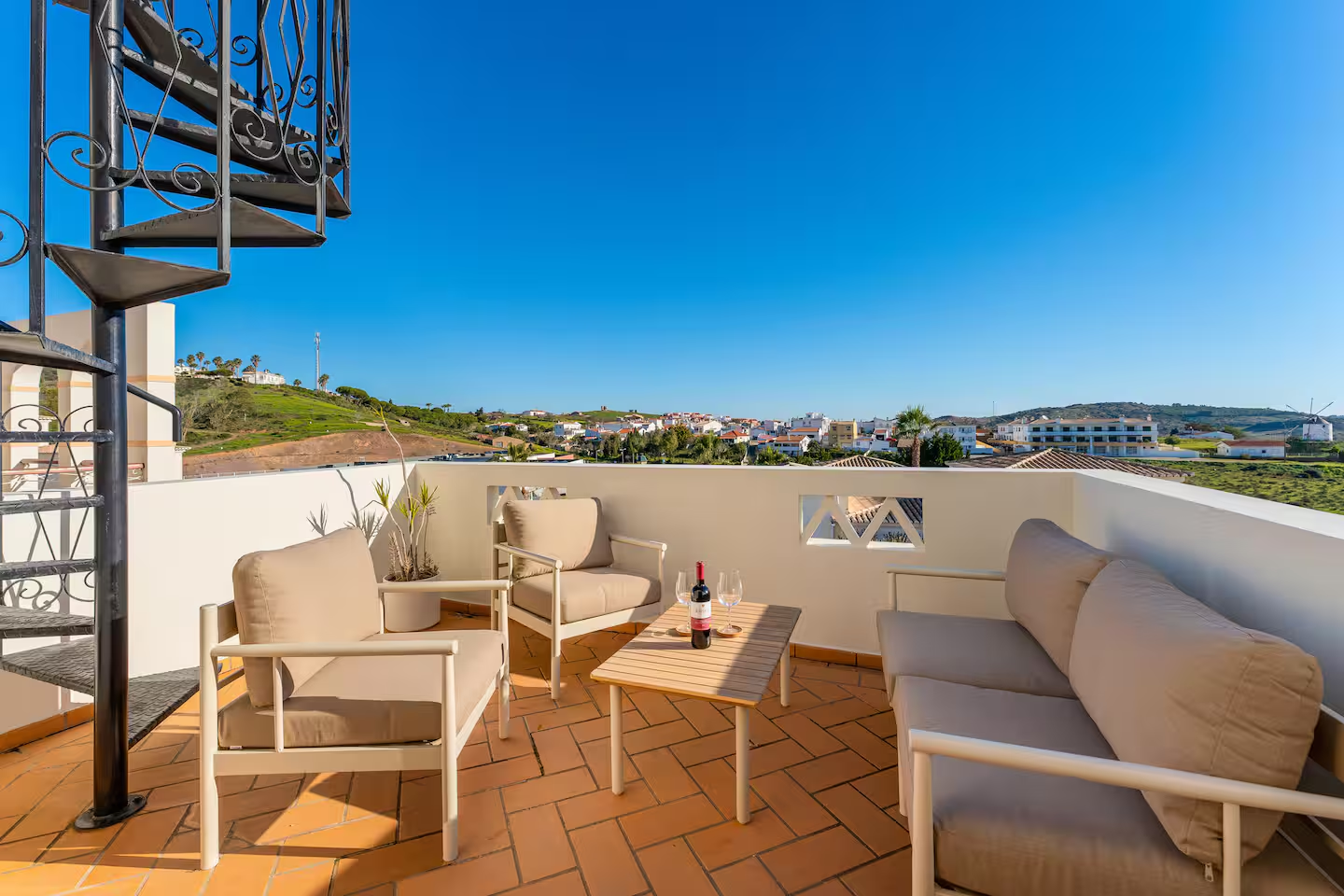
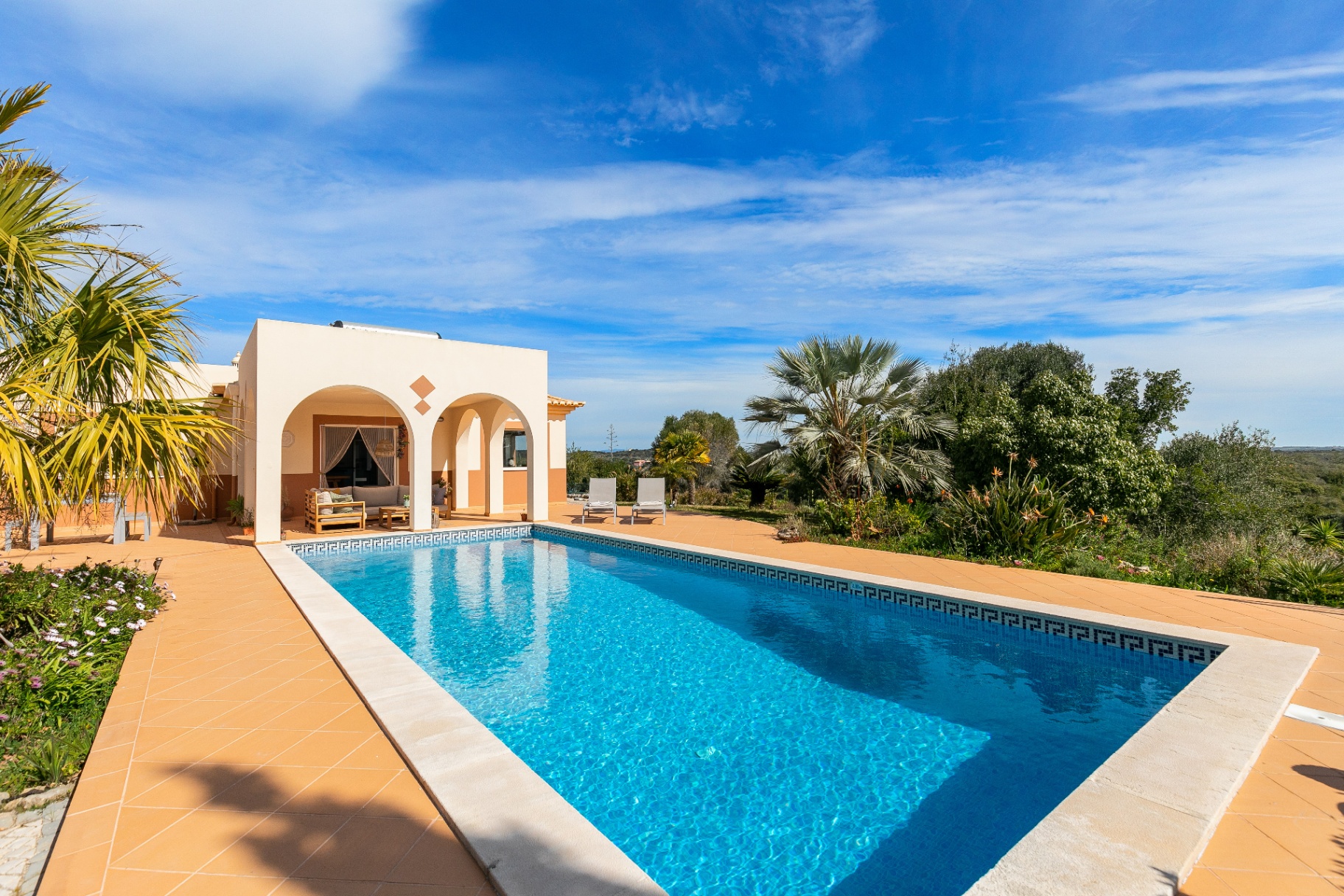
Position matters. You want to be close enough to the west-coast breaks for a dawn check, but with a comfortable base that doesn't feel like a hostel. Both our properties are well placed:
Both offer direct booking with no platform fees, fast Wi-Fi for checking surf forecasts on Surfline or Windy, and outdoor space to rig and dry kit.
A Sample Surf Week
For the full village-by-village picture see our Burgau holiday rental guide and our family holidays in the West Algarve post.